
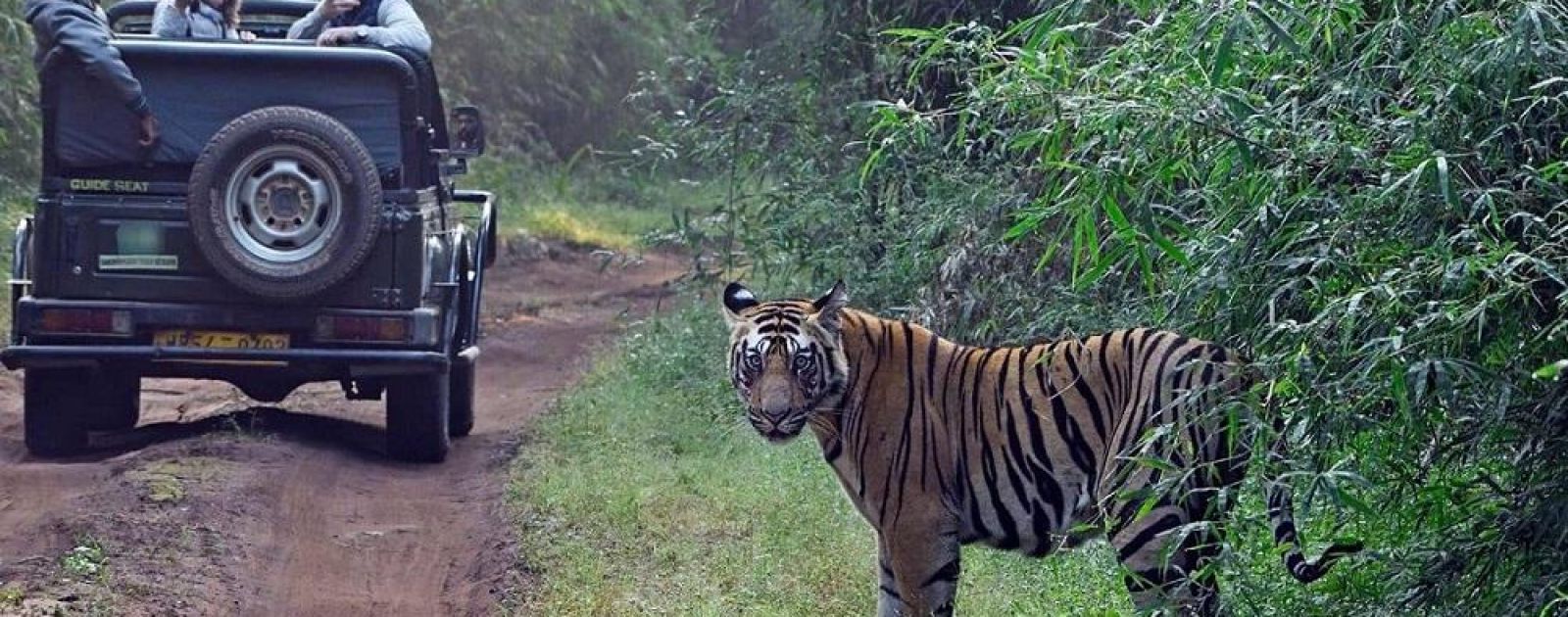
About Rajaji National Park
Rajaji National Park – A Scenic Wildlife Destination in Uttarakhand
Located to the east of Haridwar, Rajaji National Park is one of the most picturesque and ecologically rich wildlife reserves in Uttarakhand. The park stretches across the districts of Pauri Garhwal, Dehradun, and Haridwar, covering an area of approximately 820.42 square kilometers. It lies within the Shivalik range at the foothills of the Himalayas, making it a unique meeting point of the western and central Himalayan ecosystems. This geographical transition contributes significantly to the park’s remarkable biodiversity.
Rajaji National Park is an ideal destination for wildlife lovers, birdwatchers, and adventure seekers who wish to experience nature in its raw and untouched form.
Historical Background
The park was established in 1983 by combining three wildlife sanctuaries—Rajaji Sanctuary (1948), Motichur Sanctuary (1964), and Chilla Sanctuary (1977). It was named in honor of C. Rajagopalachari, a respected freedom fighter and the first and last Governor-General of independent India, who was popularly known as “Rajaji.”
Flora of Rajaji National Park
The vegetation in Rajaji National Park reflects a rich mix of ecosystems due to its location between the Indo-Gangetic plains and the Shivalik hills. The park features riverine forests, grasslands, scrublands, pine forests, and moist deciduous forests.
Some commonly found plant species include sal, shisham, palash, amaltas, khair, arjun, bamboo, semul, aonla, bel, and kachnar. These dense and diverse forests provide an ideal habitat for a wide range of wildlife species.
Wildlife in Rajaji National Park
Rajaji National Park is particularly known for its large population of Asian elephants, making it one of the important elephant habitats in northern India. The park is also home to Bengal tigers, leopards, Himalayan black bears, sloth bears, and striped hyenas.
Other animals commonly seen here include goral, barking deer, sambar, wild boar, jackals, and jungle cats. Among primates, rhesus macaques and Hanuman langurs are frequently spotted.
The reptile population includes species such as the king cobra, Indian python, common krait, and monitor lizard. In addition, the park supports a rich variety of birdlife, with more than 300 species recorded. Peacocks are commonly seen, along with birds like hornbills, kingfishers, parakeets, pheasants, and owls. The presence of butterflies and smaller bird species adds further charm to the ecosystem.
Safari Experience
Visitors to Rajaji National Park can explore its wilderness through guided safaris. Elephant safaris offer a traditional and immersive way to move through dense forest areas, often providing close encounters with wildlife. Jeep safaris are also popular and allow visitors to cover larger sections of the park comfortably while increasing the chances of spotting animals.
Safaris are usually conducted during early morning and late afternoon hours, which are considered the best times for wildlife sightings.
Nearby Attractions
Several well-known destinations are located close to the park. Haridwar, just 9 kilometers away, is a famous pilgrimage town known for its temples and the evening Ganga Aarti. It also hosts the Kumbh Mela, attracting visitors from across the world.
Rishikesh, around 18 kilometers from the park, is known as the gateway to the Garhwal Himalayas. It is a popular center for yoga, spirituality, and adventure activities such as river rafting.
How to Reach Rajaji National Park
Rajaji National Park is easily accessible by air, rail, and road.
By Air: The nearest airport is Jolly Grant Airport in Dehradun, about 35 kilometers from the park. Regular flights connect it to Delhi.
By Rail: The closest railway stations are Haridwar (24 km), Rishikesh (18 km), and Dehradun (56 km), all of which are well connected to major Indian cities.
By Road: The park is well connected by road to cities like Delhi (around 220 km) and Lucknow (approximately 510 km). Chilla Gate is just 8 kilometers from Haridwar Railway Station, making it one of the most convenient entry points.
Conclusion
Rajaji National Park offers a perfect blend of natural beauty, rich biodiversity, and thrilling wildlife experiences. Its diverse landscapes, abundant wildlife, and proximity to popular tourist destinations make it a must-visit for anyone looking to explore the wilderness of northern India.